During the last three months, I have been working on a very special commission: painting 3D printed animals for the Flora Centre in Tuixent.
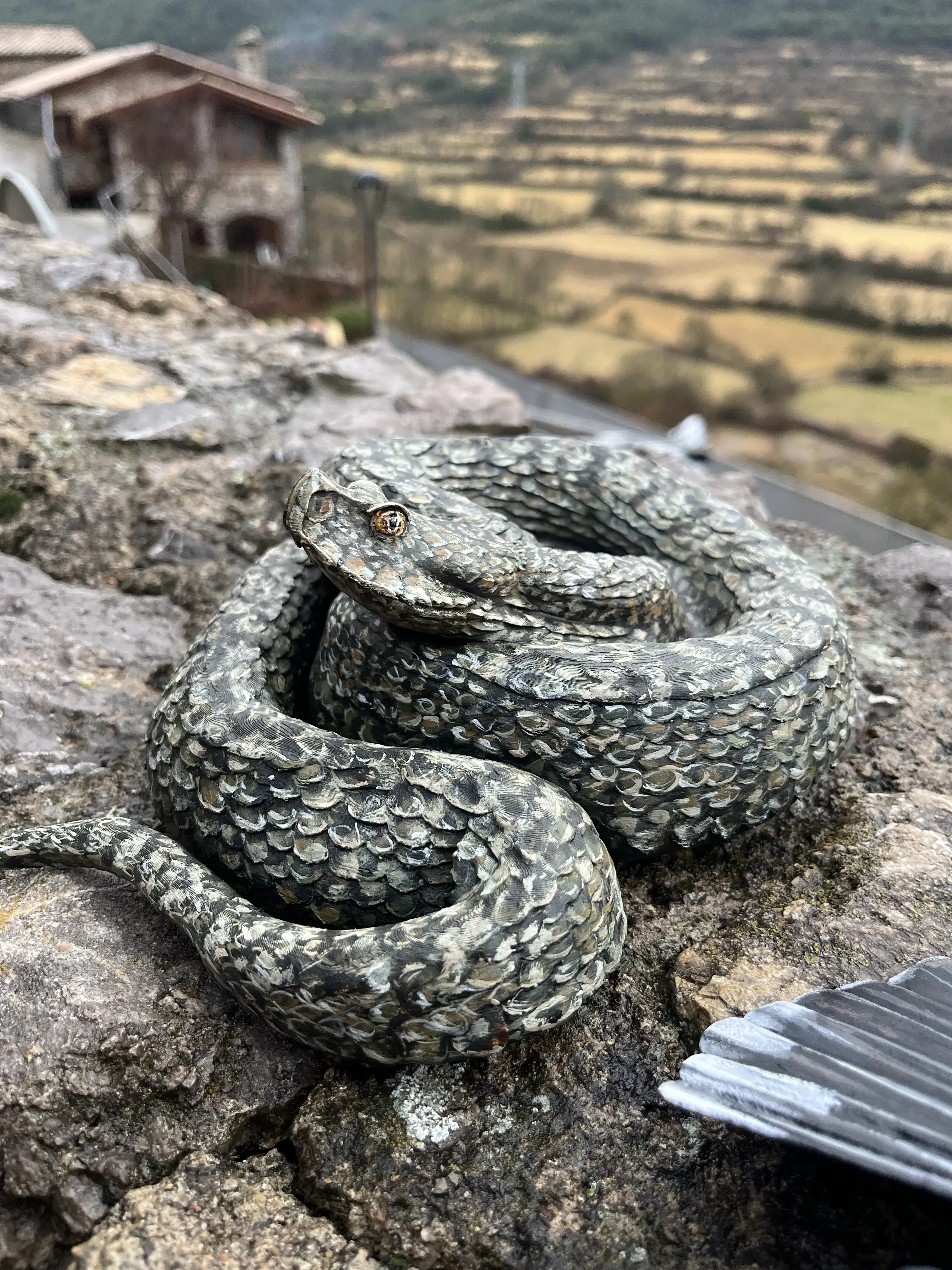
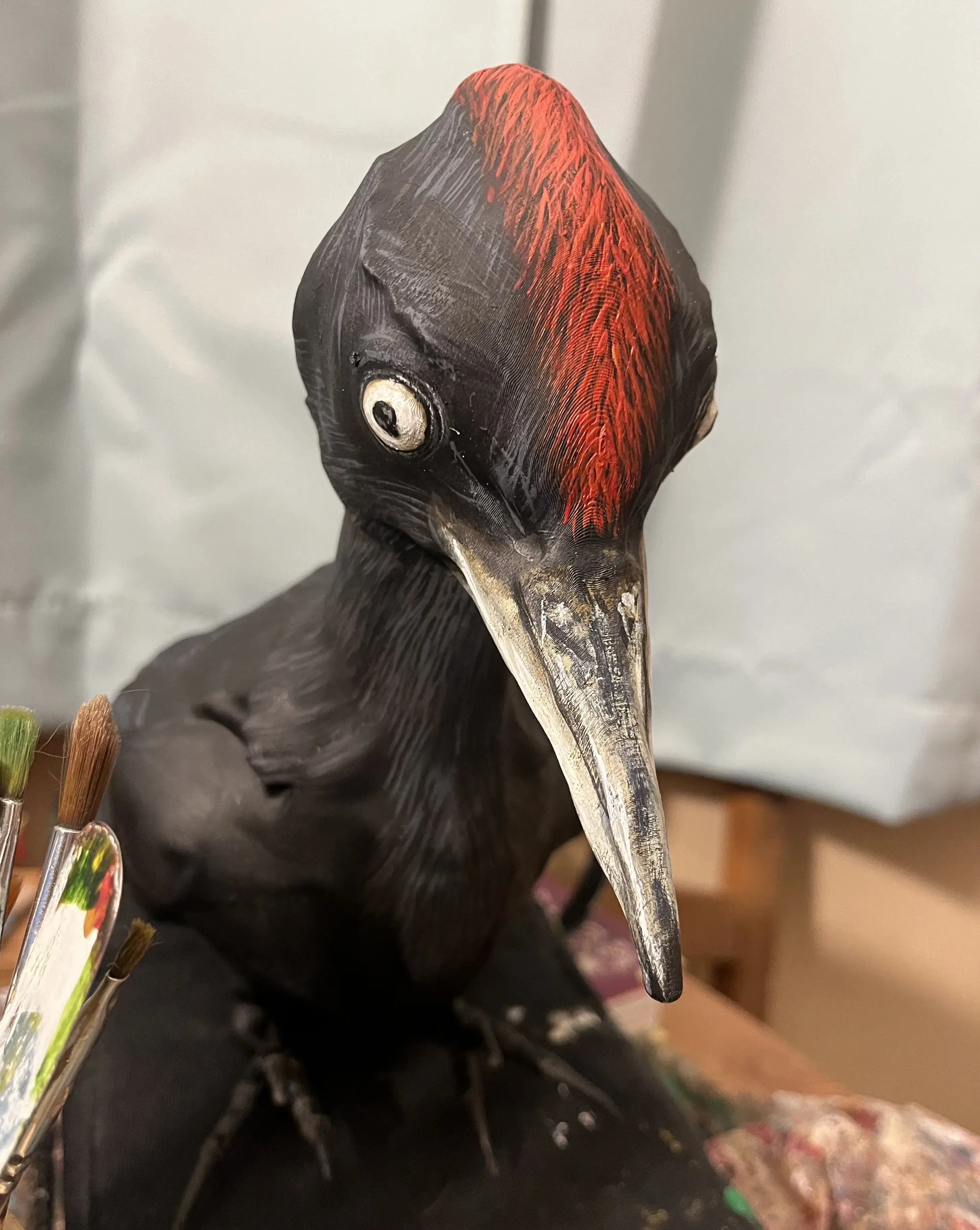
This commission comes from the Cadí-Moixeró Natural Park and consists of nine life-size animal sculptures printed by Nordic Studio (@nordic3ds). All the animals represented are species found in this area, such as the Red Fox, the Black Woodpecker and the Asp Viper.
Although I have painted animals many times on canvas and paper, this was the first time I worked on 3D sculptures. It was a completely different experience.
Painting on a flat surface allows you to control the composition within a frame. Painting a life-size sculpture requires you to move around it and see it from every angle. The relationship with the work becomes physical.
Each sculpture arrived printed in 3D, already shaped and detailed. My role was to bring them to life through paint. I used acrylic paint to create the textures and capture the essence of each animal.
The word “essence” feels important here. I was not only applying colour, studying fur patterns, feather structures, scales and tonal variations. I wanted the animals to feel present. Not decorative, but real.
Acrylic paint allowed me to build layers gradually. I worked slowly, adjusting tones, deepening shadows and adding subtle highlights. Texture became essential. On the Red Fox, for example, the fur needed variation: warmth in the orange tones, softness in the lighter areas, depth around the eyes.
The biggest challenge was painting the fox due to its size.
Working at that scale meant that every transition was visible. Small mistakes were amplified. The body demanded attention to proportion and flow. I had to step back constantly, observe from a distance, then come closer again to refine details.
Unlike smaller works, where I can hold the piece in my hands, here the sculpture occupied the studio space fully. I had to adjust my own position as much as the painting itself.
Once the painting is complete, the sculptures will be finished with varnish and a touch of resin on their eyes to create a more realistic feel.
The resin detail in the eyes makes a significant difference. Eyes are often the point where presence is felt most strongly. Adding depth and light reflection enhances that sensation of life.
These sculptures will soon be exhibited permanently at the Flora Centre in Tuixent. Knowing that they will remain there, part of an educational and environmental context, makes the work even more meaningful.
The Flora Center plays an important role in connecting visitors with the natural environment of the Cadí-Moixeró Natural Park. These life-size animals will allow people to observe species up close, perhaps noticing details they might otherwise miss in the wild.
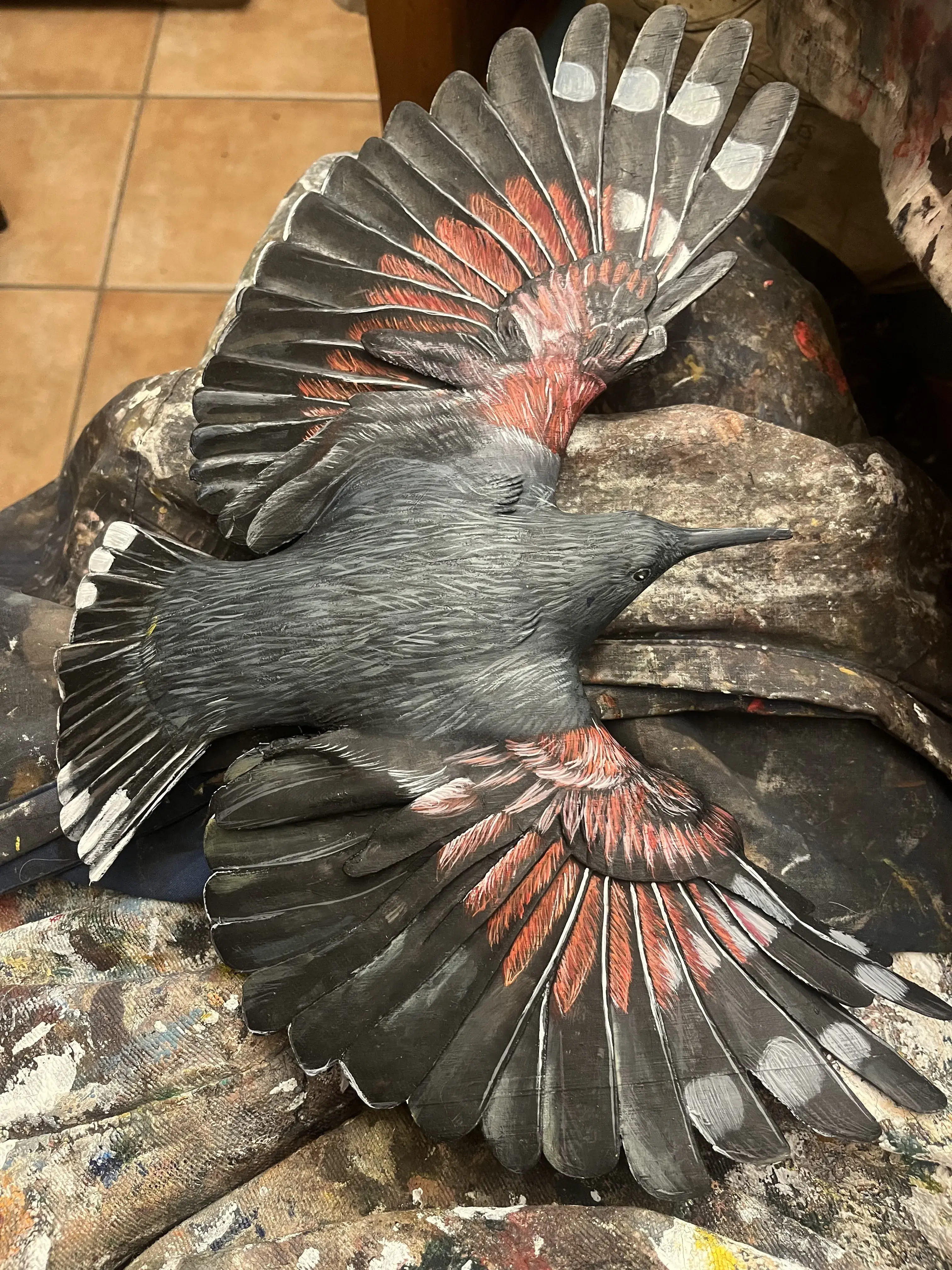
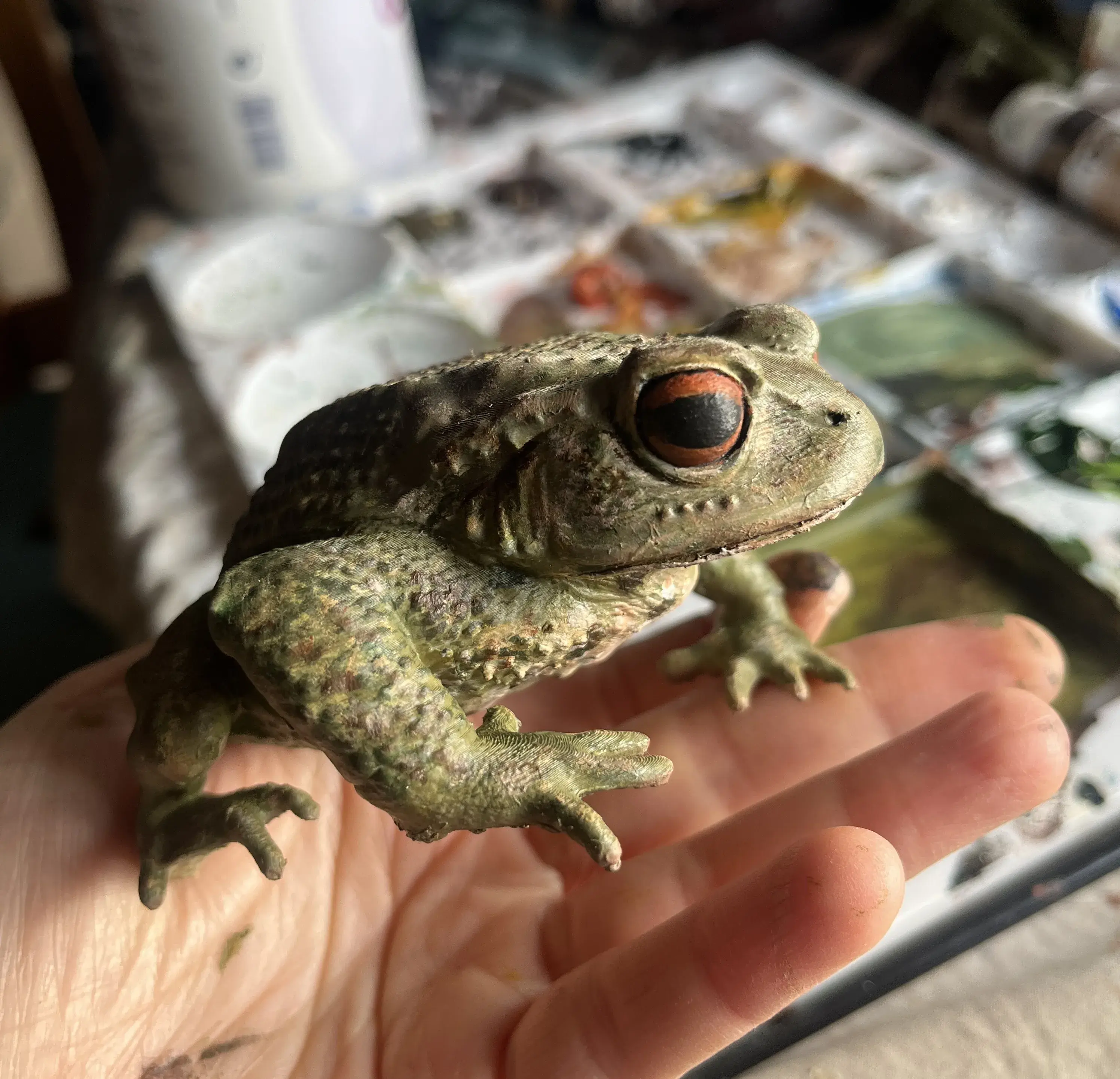
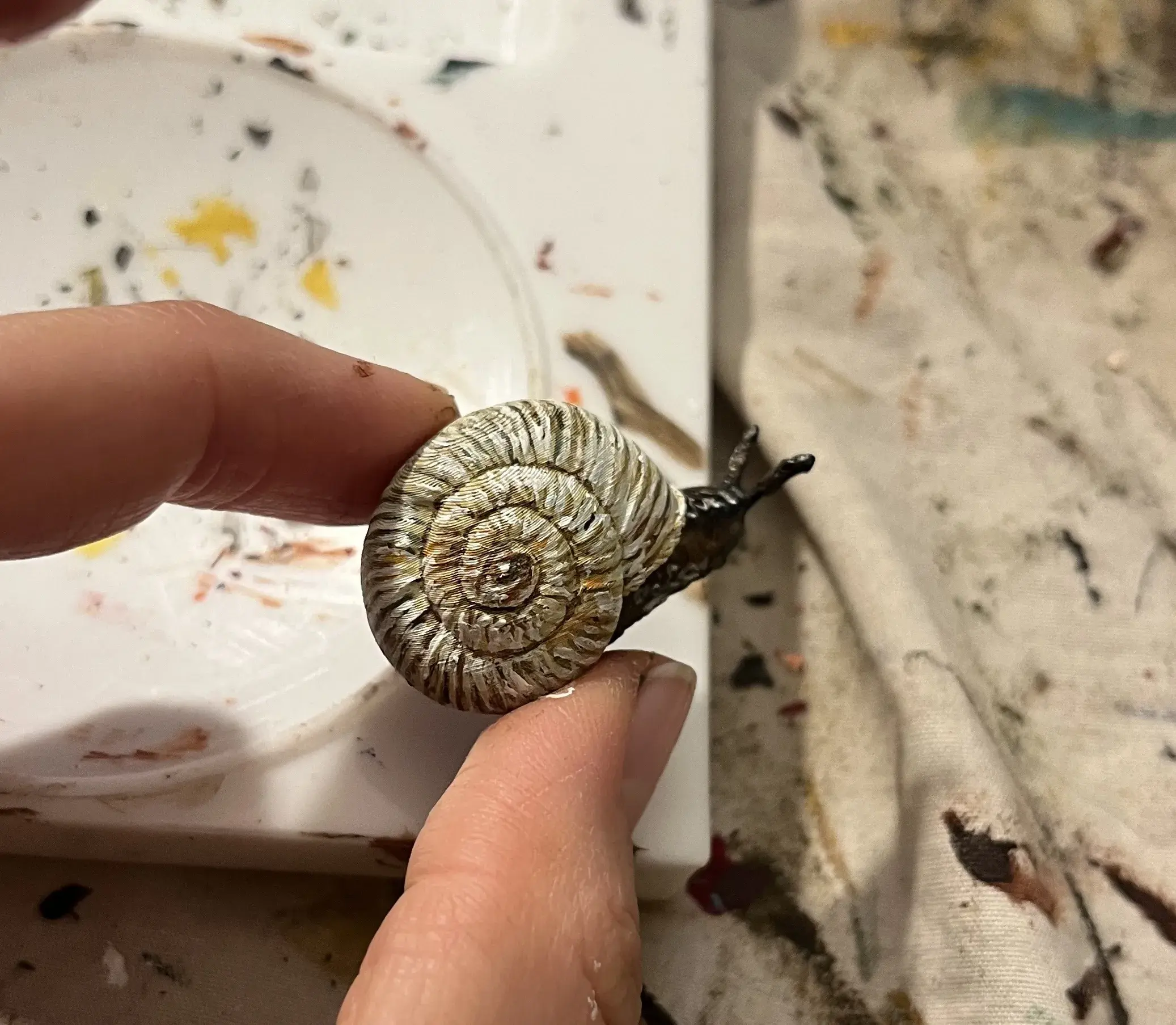
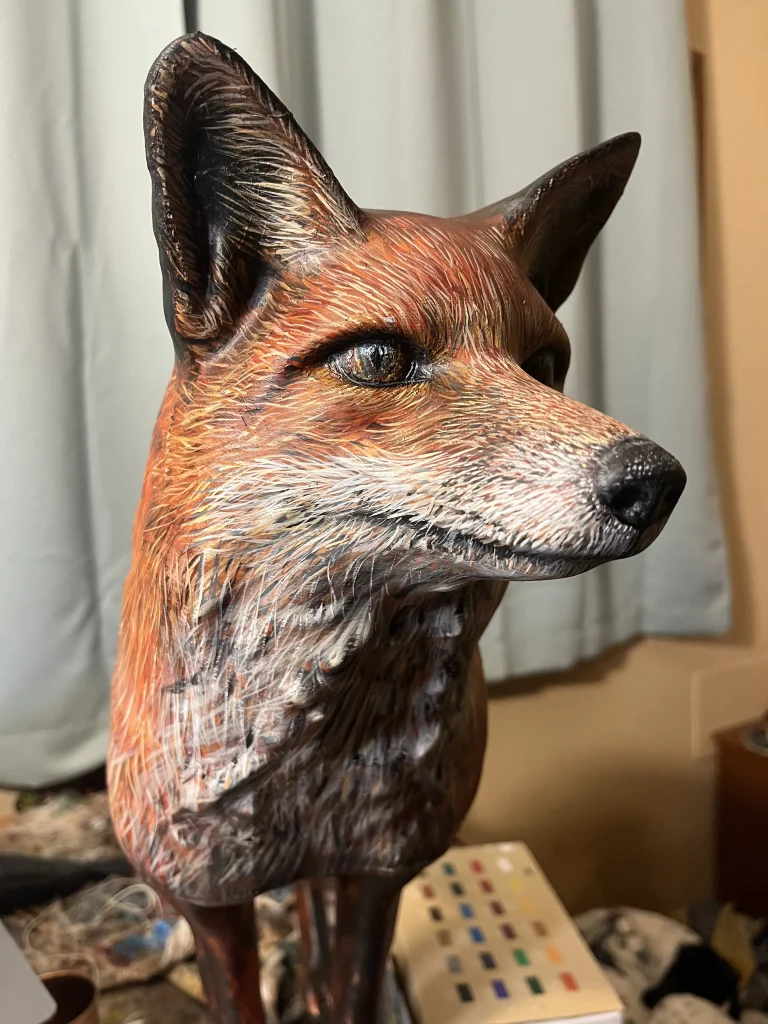
This project required a different rhythm than painting on canvas. It demanded technical focus and patience, but also adaptability.
Every animal had its own character. The Black Woodpecker required attention to feather direction and subtle tonal shifts. The Aspic Viper required careful rendering of scales and pattern. Each surface responded differently to paint.
There is something intimate about working on an object that represents a real species from the area where I live. I often see foxes crossing fields at dusk. Woodpeckers echo through the forest. Vipers move quietly through rocky terrain. Painting them at life-size felt like extending that observation into the studio.
This commission was made possible through collaboration with Nordic Studio, who printed the 3D sculptures, and the Cadí-Moixeró Natural Park.
It is always meaningful to work on projects connected to the natural park. The landscapes and wildlife of this region are not abstract themes in my work. They are my daily surroundings.
The sculptures will soon become part of the Flora Center’s permanent exhibition, where visitors will encounter them as representations of local biodiversity.
My next blog post will include quality photos of the finished pieces. Seeing them installed in their final space will complete the process.
And the work does not stop here. I now have 25 plants to paint.
This next phase will shift focus from fauna to flora, continuing the connection between art and the natural heritage of the region.
Projects like this remind me that painting is not confined to canvas. It can inhabit space. It can stand at eye level. It can meet viewers directly.
The Flora Centre is connected to the Cadí-Moixeró Natural Park and presents elements of the local natural heritage, including wildlife and plant species.
The commission consists of nine life-size animal sculptures printed in 3D by Nordic Studio.
The sculptures include species found in the area, such as the Red Fox, the Black Woodpecker and the Asp Viper
If you would like to see more of my wildlife paintings and recent projects, you can visit my online gallery, where I share my latest works and ongoing series.
I also share studio moments and updates from Tuixent on Instagram at @valentina_abadia_art. You are very welcome to follow along there.